Should You Work Remotely From Langkawi? Here's the Honest Answer

You've seen the photos. Laptop on a wooden table, coconut within arm's reach, ocean view through the window. The "working from paradise" aesthetic is everywhere on travel Instagram, and Langkawi — with its jaw-dropping scenery and low cost of living — is exactly the kind of place that fuels those posts.
But here's the question nobody asks loudly enough: does it actually work? Not the vibe — the work. Can you reliably join a 9am Zoom call, hit a client deadline, and not blow your data plan on a single video upload?
If you're an American remote worker or freelancer seriously weighing a Langkawi stint, this is the honest breakdown you need before you book anything.
The Internet Situation: Better Than You'd Expect, With Caveats
Let's start with the make-or-break question. Langkawi's internet infrastructure has improved significantly over the past several years, but it's not uniformly reliable island-wide.
In the main tourist zones — Pantai Cenang, Pantai Tengah, and Kuah town — you'll generally find fiber or high-speed broadband available in hotels, guesthouses, and cafes. Mid-range to upscale hotels typically offer speeds that are more than sufficient for video calls, cloud-based work, and file uploads. Some of the more established boutique hotels and resorts have invested in serious connectivity upgrades precisely because they've noticed the remote work crowd arriving.
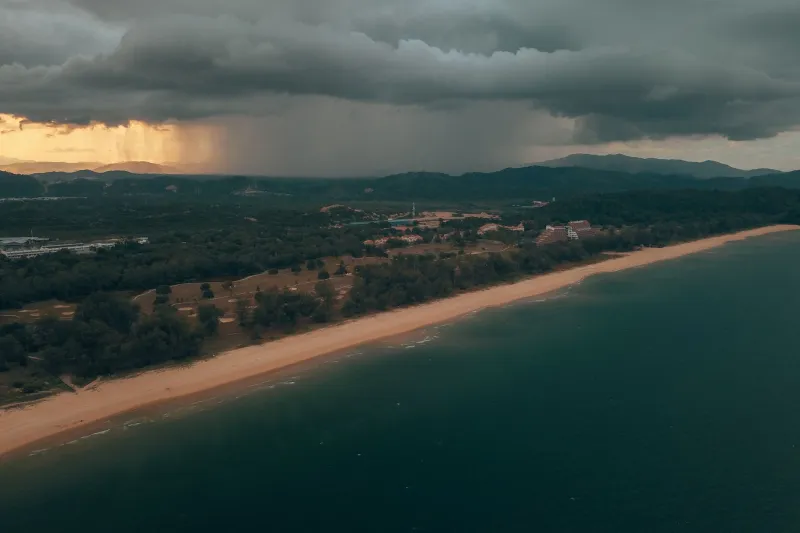
The catch is consistency. Power outages happen occasionally, especially during heavy monsoon rains. And if you venture into more rural parts of the island — which is tempting, because that's where some of the most beautiful accommodations are — you may find yourself relying on mobile data.
Practical move: Before booking any accommodation for a longer stay, email the property directly and ask specifically about upload and download speeds, not just whether Wi-Fi is "available." A good hotel will have actual numbers. If they can't tell you, that's a red flag.
Malaysia's major mobile carriers (Maxis, Celcom, Digi) all have coverage on the island. Grabbing a local SIM card at the airport or in Kuah is easy and cheap — a data-heavy plan runs about $10 to $15 per month. This makes a solid backup option when your hotel Wi-Fi is having a rough day.
Coworking Spaces: Slim Pickings, But Improving
Here's where Langkawi lags behind places like Chiang Mai, Bali, or Lisbon. Dedicated coworking spaces on the island are limited. This isn't a hub with a thriving nomad infrastructure — it's primarily a vacation destination that's only beginning to attract longer-stay remote workers.
That said, several cafes in the Cenang area have quietly positioned themselves as work-friendly spots with reliable Wi-Fi, decent coffee, and an understanding that you might nurse one drink across three hours of deep focus. These aren't coworking spaces in the formal sense, but they function similarly for most freelancers' needs.
For anyone who needs a more structured environment — dedicated desks, meeting rooms, fast guaranteed uploads — you'll either need to negotiate something with your hotel or accept that Langkawi isn't quite there yet. If coworking infrastructure is a dealbreaker for your workflow, Penang (a two-hour ferry ride away) has a much more developed scene and is a reasonable day-trip or weekend option.
The Visa Reality for American Travelers
Good news here. American passport holders get 90 days in Malaysia visa-free upon arrival. For a lot of remote workers, that's more than enough runway for a solid stay.
The important caveat: Malaysia doesn't currently have a formal digital nomad visa in the same way some countries do (though this has been discussed at the policy level). You're entering as a tourist. Technically, working remotely for foreign clients while on a tourist visa occupies a legal gray area that's common across Southeast Asia. The practical reality is that enforcement is minimal for people working for companies or clients outside Malaysia, but it's worth being aware of the situation.
If you're planning a very long stay or want to do this by the book, it's worth consulting a visa specialist or checking the latest guidance from the Malaysian immigration authority. Rules shift, and what's true today may be different in six months.
The Time Zone Math (And Why It Matters More Than You Think)
This is the part that doesn't get enough attention in the "work from paradise" conversation. Langkawi runs on Malaysia Standard Time — UTC+8. That puts it:
- 13 hours ahead of Eastern Time (ET)
- 16 hours ahead of Pacific Time (PT)
Let's do the math on a typical US business day. If your clients or team are on the East Coast, their 9am is your 10pm. Their 5pm is your 6am the next day. For a Pacific Time team, it's even more extreme.
This isn't unmanageable, but it requires honesty about your work style. Fully async workers — writers, developers, designers, anyone who operates primarily through email and project management tools — will barely notice the difference. You work your hours, they work theirs, and the overlap gap gets bridged through documentation.
But if your job involves real-time collaboration, frequent video calls, or being "on" during US business hours, you're looking at late nights in Langkawi. A 10pm to 2am "work shift" to cover East Coast hours is doable for short stretches but gets old fast on a multi-week stay.
The workaround many nomads use: Negotiate a flexible schedule in advance. Many remote-friendly companies are used to async-first setups. If you can shift your team to expect responses within a 24-hour window rather than same-day, the time zone issue largely dissolves.
Cost of Living: The Part That Actually Impresses
Langkawi is genuinely affordable by American standards, and its duty-free status makes it even more so. Here's a rough monthly cost picture for a solo remote worker:
- Accommodation (mid-range guesthouse or serviced apartment): $400–$900/month
- Food (mix of local stalls and occasional restaurant meals): $200–$350/month
- Transportation (scooter rental is the standard move): $80–$120/month
- Mobile data + utilities: $30–$50/month
- Miscellaneous (activities, shopping, the odd beach bar): $100–$200/month
Total range: roughly $800 to $1,600/month, depending on your accommodation choice and lifestyle.
For comparison, Bali's Canggu neighborhood — probably the most famous Southeast Asian nomad hub — runs $1,200 to $2,500+ per month when you factor in the coworking space memberships and the social scene inflation. Chiang Mai is similarly priced to Langkawi but with a far more developed nomad infrastructure.
Langkawi undercuts both on pure cost, but you're trading some of that infrastructure for natural beauty and a quieter pace.
The Productivity Question: Paradise Is Also a Distraction
Let's be real. It is very hard to sit at a laptop when there's a beach that looks like a screensaver 200 meters away. Langkawi is stunning in a way that genuinely competes for your attention, and the island's pace is slow and relaxed almost by design.
Some people thrive in this environment — the low stimulation of a beach town helps them focus in a way that a busy city like Bangkok or KL never would. Others find themselves perpetually half-working, half-daydreaming, and neither thing well.
Know yourself before you commit. A two-week trial run is worth doing before you plan a two-month stay.
The Verdict
Langkawi works well as a remote work base for a specific type of nomad: async-first, self-motivated, not dependent on a coworking community, and genuinely energized by natural surroundings over urban buzz. If that's you, the cost savings alone make it worth serious consideration, and the quality of life is hard to argue with.
If you need reliable coworking infrastructure, real-time US business hours overlap, or a built-in community of fellow nomads, Langkawi isn't quite there yet — though it's getting closer every year.
For the right person, though, a month on this island with a laptop and a good hotel Wi-Fi connection is a genuinely excellent way to work. Just maybe close the curtains facing the beach until after 5pm.