How Langkawi Hotels Are Making Money Off Your Credit Card (And How to Stop It)
Let's say you check out of your Langkawi resort after a week of genuinely spectacular vacation. The bill looks roughly right. You sign, smile at the front desk staff, and head to the airport feeling like you got decent value for your money.
What you might not know is that somewhere in that bill — probably in a few different places — the hotel quietly extracted an extra 3%, 5%, maybe even 8% from you through exchange rate manipulation. Not through fraud. Not through hidden fees in the traditional sense. Through a system that's perfectly legal, widely practiced, and almost never explained to guests.
If you're an American traveling to Langkawi, understanding how hotel currency exchange works isn't optional. It's the difference between getting fair value and quietly subsidizing the resort's bottom line.
The Basic Setup: You're Spending Ringgit, Whether You Know It or Not
Malaysia's currency is the Malaysian Ringgit (MYR). When you stay at a Langkawi hotel, your room rate, meals, spa treatments, and incidentals are all priced in Ringgit — even if the hotel's website showed you a dollar figure during booking.
When it comes time to pay, there are essentially two ways the currency conversion can happen:
-
Your credit card does the conversion using its network exchange rate (Visa or Mastercard's mid-market rate, which is close to the real exchange rate), and your bank may add a foreign transaction fee on top of that.
-
The hotel does the conversion using its own in-house exchange rate, which is almost always less favorable than what your card network would offer.
Option two sounds convenient — you see the charge in dollars, everything feels familiar. But that convenience costs you money every single time.
Dynamic Currency Conversion: The Trick That Costs You Most
The specific mechanism hotels (and ATMs, and some restaurants) use to do this is called Dynamic Currency Conversion, or DCC. Here's how it plays out:
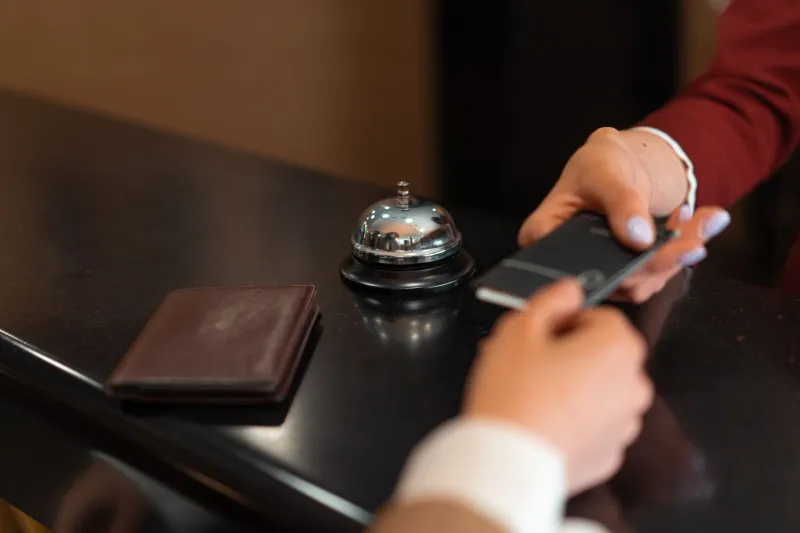
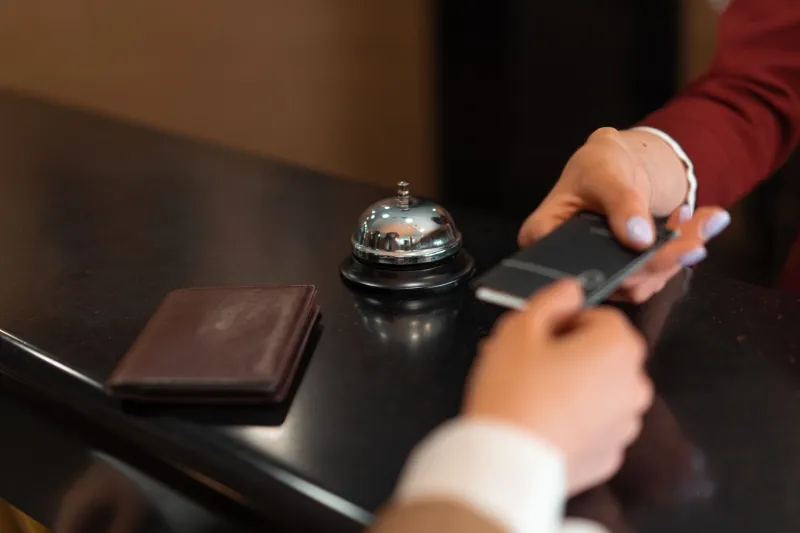
You hand over your American credit card to pay your hotel bill. The payment terminal detects that it's a foreign card and automatically offers to process the transaction in US dollars instead of Ringgit. The screen might say something like "Would you like to pay in USD for your convenience?" or it might just default to dollars without asking.
If you say yes — or if you don't notice and don't say no — the hotel processes the transaction using its own exchange rate. That rate is typically 3–8% worse than the mid-market rate. On a $1,500 hotel bill, that's $45–$120 gone, just like that, for the privilege of seeing a dollar sign instead of an MYR symbol.
The hotel keeps a portion of that spread as profit. The payment processor takes a cut too. You get nothing except the illusion of simplicity.
The fix is simple but requires you to be alert at checkout: always choose to pay in the local currency (Malaysian Ringgit) when given the option. Let your credit card handle the conversion. Even if your card charges a foreign transaction fee, you're almost certainly still coming out ahead.
It's Not Just at Checkout
DCC and unfavorable exchange rates don't only show up on your final bill. They can appear at multiple points during your stay:
Minibar and room service charges are often processed separately and can trigger DCC on smaller transactions where the percentage loss feels minor but adds up.
Spa and restaurant charges at resort properties frequently run through their own payment systems, each of which may offer — or default to — dollar conversion.
Incidental holds placed on your card at check-in are sometimes processed in dollars even when the main room charge is in Ringgit, depending on the hotel's system setup.
Hotel currency exchange desks are another trap entirely. If you're exchanging cash, the hotel's desk will give you a significantly worse rate than a local bank, a licensed money changer in Kuah or Pantai Cenang, or simply withdrawing Ringgit from an ATM using your debit card.
The Real Math: What This Actually Costs
Let's run a realistic scenario. American couple, seven nights at a mid-range Langkawi resort. Room rate: roughly 800 MYR per night (about $170 USD at a fair exchange rate). Total room cost: 5,600 MYR.
Add meals at the hotel restaurant (not every meal, but several): 800 MYR. Spa treatments: 600 MYR. Incidentals and minibar: 200 MYR. Total bill: approximately 7,200 MYR, or about $1,530 USD at a fair rate.
Now apply a 5% DCC markup across the board. That's an extra $76.50. Apply it only to certain charges and miss it on others, and you're looking at $40–$60 in losses that show up nowhere on your itemized receipt. It's just baked into the exchange rate.
Over the course of a week, across two people, that's real money — money that could have been a nice dinner in town or a snorkeling trip.
The Credit Cards That Actually Protect You
The single most effective tool for avoiding currency conversion losses is using a credit card with no foreign transaction fees and a strong network exchange rate. A few worth knowing about:
- Chase Sapphire Preferred / Reserve: No foreign transaction fees, Visa network rates, strong travel protections
- Capital One Venture / Venture X: No foreign transaction fees, consistently solid exchange rates
- Schwab Debit Card: Refunds all ATM fees worldwide, uses mid-market exchange rates — excellent for Ringgit withdrawals
- Amex Platinum: No foreign transaction fees, though Amex acceptance is less universal in Malaysia than Visa or Mastercard
If you're traveling to Langkawi without one of these in your wallet, it might be worth applying before your trip. The savings on a week-long stay can easily exceed the card's annual fee.
A Few More Practical Moves
Withdraw Ringgit from ATMs, not hotel desks. Use a Visa or Mastercard-branded ATM in Langkawi town, always decline the ATM's DCC offer (it'll ask), and let your home bank handle the conversion.
Pay for big-ticket items in Ringgit explicitly. When you hand over your card for spa services or a resort dinner, say clearly: "Please charge in Ringgit." Most staff will accommodate without issue.
Review your charges daily. Check your card's app each evening to catch any DCC conversions before they pile up. Some banks let you dispute these charges if they happened without your consent.
Consider carrying some cash. Local warungs, food stalls, and markets in Langkawi are cash-only and priced in Ringgit. Using cash in these spots sidesteps the conversion issue entirely and often gets you better prices anyway.
Langkawi is worth every cent you spend there — but only the cents you actually choose to spend. Don't let a payment terminal make those decisions for you.