Eat Where the Locals Eat: A Real Food Lover's Guide to Langkawi Beyond the Hotel Buffet
Let's be straight with you: the buffet at your resort isn't bad. The spread is usually solid, the air conditioning is glorious, and nobody's judging your plate size. But if you leave Langkawi having eaten mostly pad thai and pasta carbonara — dishes that shouldn't even be on a Malaysian island — you've missed the whole point.
Langkawi's food scene is one of its most underrated features, and the best of it costs less than a cocktail at your pool bar. Here's how to find it.
Why Langkawi's Local Food Scene Hits Different
Malaysia sits at a cultural crossroads — Malay, Chinese, Indian, and Thai influences have been layering flavors here for centuries. Langkawi, being right on the Thai border, adds yet another dimension to the mix. That means you're not just eating "Malaysian food" in some generic sense. You're eating hyper-regional stuff: coconut-heavy Malay curries, Hokkien-style noodles from Chinese kopitiam traditions, and roti canai that'll ruin every American diner pancake for you forever.
The other thing worth knowing: Langkawi is a duty-free island. That keeps prices low across the board, including food. A full meal at a hawker stall might run you 8 to 15 Malaysian ringgit — roughly $1.75 to $3.50 at current exchange rates. Even a sit-down meal at a decent local restaurant rarely tops $8 to $10 per person.
Kuah Town: Your First Stop for Real Malaysian Flavor
Kuah is Langkawi's main town, and it's where a lot of tourists go only to shop at duty-free liquor stores and then leave. That's a mistake. Wander past the strip malls and you'll find some of the island's best kedai kopi — the Malaysian version of a neighborhood coffee shop, where food is as important as the drinks.
Look for spots serving nasi lemak in the morning. This is Malaysia's unofficial national dish: fragrant coconut rice served with crispy fried anchovies, roasted peanuts, hard-boiled egg, cucumber slices, and a scoop of sambal chili paste. For an American palate, think of it as a savory breakfast bowl with a gentle heat that builds slowly. It's rich, satisfying, and typically costs under $2.
For lunch in Kuah, hunt down a nasi campur setup — these are essentially Malaysian-style cafeteria counters where you point at pre-cooked dishes and they pile them over rice. It looks chaotic, but you can't really go wrong. Point at things that look good. Expect to pay $2 to $4 depending on how many dishes you grab.
Cenang and Tengah: Beach Town Bites Worth Skipping the Sand For
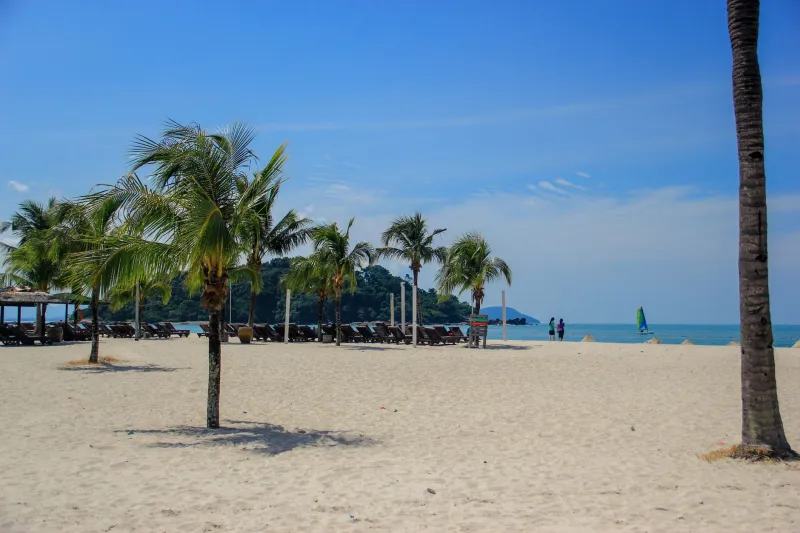
Pantai Cenang is Langkawi's most tourist-heavy beach strip, and yes, there are plenty of overpriced Western restaurants here. But tucked between the souvenir shops and beachfront bars, you'll find some genuinely excellent local spots if you look.
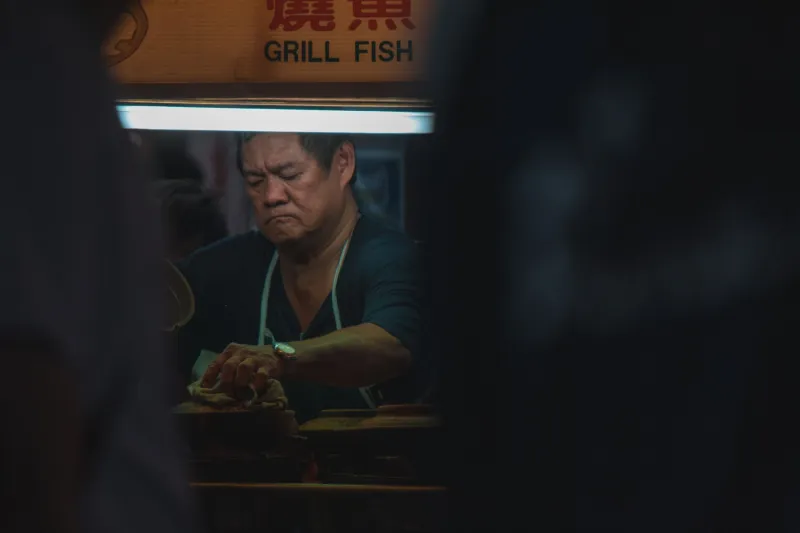
The night market scene near Cenang is worth a visit. Stalls fire up in the early evening and stay busy until around 10 or 11 pm. This is where you want to try mee goreng — stir-fried noodles with egg, tofu, and your choice of protein, cooked over high heat in a well-seasoned wok. The char (that slightly smoky edge from the flame) is everything. You'll also find satay here: skewered and grilled meat served with peanut sauce that bears zero resemblance to the jarred stuff back home.
If you're near Pantai Tengah, look for the small beachside seafood shacks along the southern end. These are family operations, often without menus in English, but the drill is simple: pick your fish, crab, or prawns from the display, choose a cooking style (grilled, steamed, or fried with butter and garlic is a crowd-pleaser), and wait. Grilled stingray wrapped in banana leaf with sambal is a regional specialty that sounds intimidating and tastes incredible — tender, mildly sweet, with a smoky, spicy kick.
Must-Try Dishes, Decoded for the American Palate
- Laksa: A spiced noodle soup. Langkawi's version tends toward the Malay style — coconut milk-based and aromatic rather than the sour, tamarind-forward Penang version. Think of it as a deeply savory, lightly spicy noodle bowl.
- Roti canai: Flaky flatbread, cooked on a griddle, served with dhal (lentil curry) or curry sauce for dipping. It's the Malaysian answer to a breakfast biscuit, except better in every conceivable way.
- Teh tarik: Literally "pulled tea" — black tea mixed with sweetened condensed milk, poured back and forth between two cups to create a frothy, caramel-sweet drink. It's essentially a latte's more interesting cousin.
- Asam pedas: A sour and spicy fish stew common in Malay cooking. The tamarind base gives it a tang that cuts through the heat. Excellent over rice.
- Cendol: A cold dessert made with shaved ice, green rice flour jelly noodles, coconut milk, and palm sugar syrup. In the Langkawi heat, this is practically medicinal.
Practical Tips: Eating Smart and Eating Safely
Food safety concerns are real but manageable. A few guidelines go a long way:
Stick to busy stalls. High turnover means the food is fresh. A place with a line at lunchtime is almost always a good sign. An empty stall in the middle of the day should give you pause.
Watch the ice situation. Most established stalls and restaurants use commercially produced, tube-shaped ice that's made from filtered water — that's generally fine. Ice that looks like it was chipped off a block is a different story. When in doubt, skip the ice in your drink.
Wash your hands. This sounds obvious, but not every stall has a sink nearby. Keep a small bottle of hand sanitizer in your bag.
Communicate dietary restrictions clearly. Halal food is the default in most Malay-run stalls, so pork is rarely an issue there. Chinese-run kopitiam often do use pork. Vegetarians should ask specifically — dishes that look vegetable-based sometimes contain shrimp paste or anchovies as a base flavoring.
Go where Malaysians go. If the clientele is mostly tourists, the menu has probably been adjusted for tourist preferences (and tourist prices). Follow the locals.
Budget Expectations
Eating like a local in Langkawi is genuinely cheap by any standard. A full day of meals — breakfast at a kedai kopi, lunch at a nasi campur counter, and a seafood dinner at a beachside shack — can run $10 to $20 total, including drinks. Compare that to $40 to $80 for the same number of meals at resort-level restaurants, and the math is pretty compelling.
Bring cash in ringgit. Small local stalls rarely take cards, and the exchange rate you'll get at an ATM in Kuah is generally better than what airport exchanges offer.
The Bottom Line
Langkawi's culinary identity is one of its best-kept secrets from the tourist circuit — and that's partly because resorts have no incentive to send you to a $2 roti canai stand. But the food you'll find in Kuah's kopitiam, at Cenang's night market, and along the seafood shacks of Tengah is the kind of thing that sticks with you long after the tan fades. Don't leave it off the itinerary.