The One Hotel Feature That Turns a Rainy Langkawi Trip Into the Best Vacation You've Ever Taken
Let's be honest. You've done the research, booked the flights, and mentally committed to two weeks of turquoise water and jungle sunsets. Then you check the weather and see that little rain cloud icon plastered across every single day. Cue the spiral.
Here's the thing though — experienced Langkawi travelers don't spiral. They plan differently. And the single biggest factor separating a soggy, frustrating trip from an unexpectedly magical one isn't the weather app. It's the hotel you chose before you ever got on the plane.
Specifically, it comes down to one architectural and design philosophy that the best properties in Langkawi have quietly mastered: the seamless indoor-outdoor transition, often paired with covered open-air living spaces that let you experience the rain without being soaked by it.
Sounds simple, right? It's actually a bigger deal than you'd think.
Why Most Hotels Fail You When It Rains
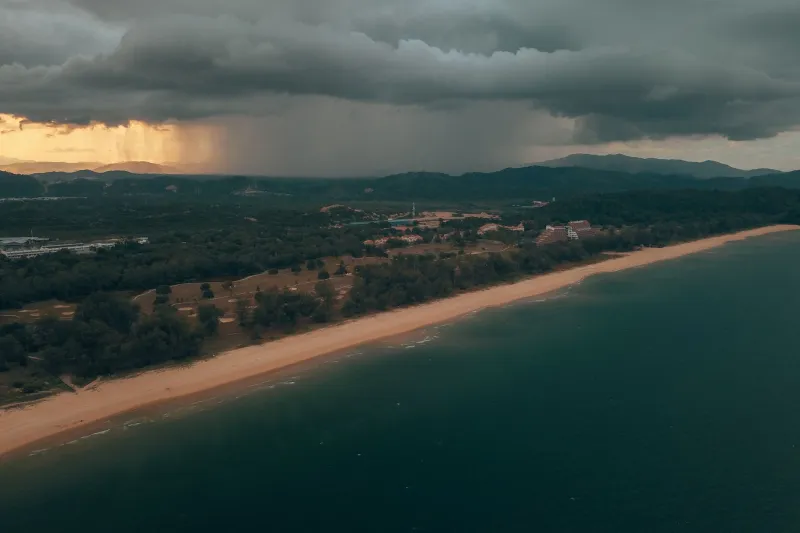
A lot of resorts — even beautiful, expensive ones — are designed with the assumption that guests will always be outside. Pools, beach access, open terraces. Great in the dry season. When the southwest monsoon rolls in between May and October and drops warm, dramatic rain for hours at a stretch, those same properties suddenly feel like you're trapped inside a standard hotel room with nothing to do but watch Netflix shows you could've watched at home.
That's the failure mode. And it's more common than you'd expect, even at properties with impressive star ratings.
The hotels that genuinely work during monsoon season are designed around a different assumption: that guests should be able to enjoy the environment even when the skies open up. And the physical feature that makes that possible is the deep covered veranda, or what architects in Southeast Asia call the 'transitional space.'
What the Transitional Space Actually Does
Think about the best porch you've ever sat on during a rainstorm back home — the kind where you're completely dry but close enough to feel the cool mist and hear everything. That feeling, scaled up and made luxurious, is exactly what the best Langkawi hotels have engineered into their DNA.
At the resort level, this translates to a few specific things:
Deep overhanging rooflines that extend far enough over outdoor seating areas that guests can lounge, eat, or have a drink without an umbrella in hand. Some properties in Langkawi build these out six to ten feet from the structure itself.
Covered walkways connecting buildings so that moving between your room, the restaurant, the spa, and the pool doesn't require a mad dash through a downpour. It sounds like a small thing until you're at a property that doesn't have them.
Open-air lobbies and common areas that are technically 'outside' but sheltered enough to feel like a living room. Watching a monsoon roll in across the Andaman Sea from one of these spaces is, genuinely, one of the more cinematic experiences you can have in Southeast Asia.
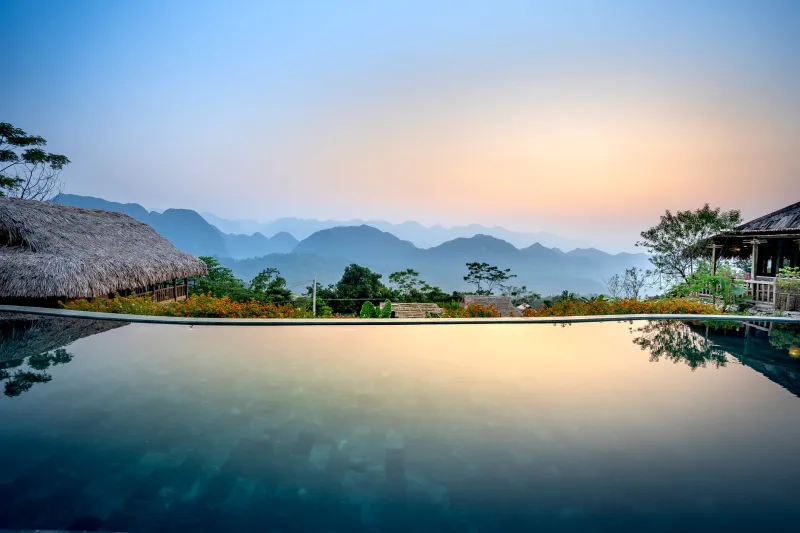
Infinity pools positioned under partial shade structures — because yes, swimming in warm rain is actually wonderful, but having the option to step under cover without leaving the pool area is what separates a good experience from a great one.
The Spa Situation Deserves Its Own Conversation
If there's a silver lining to rainy season that even skeptical travelers tend to agree on, it's this: you finally have a legitimate excuse to spend a full day at the spa without feeling like you're wasting beach time.
But again, not all spas are created equal when it comes to rain. The properties worth booking during monsoon months tend to have treatment rooms that are either open-air or semi-open, positioned so that the sound and smell of rainfall becomes part of the treatment itself. There's a reason Langkawi's best wellness properties market their rainy-season packages specifically — a four-hand massage with warm tropical rain hitting a garden just outside the open window is a different experience than the same treatment in a sealed, air-conditioned room.
When you're comparing hotels, look for spa facilities that explicitly describe outdoor or garden-adjacent treatment rooms. That detail in the amenities list is a signal that the property was designed with sensory immersion in mind, not just weather avoidance.
What to Actually Look for When Booking
So how do you identify these properties before you commit? A few practical filters:
Read the photo galleries critically. Most hotels will show you their best sunny-day shots, but look for images of covered common areas, walkways, and lobby spaces. If every photo is of the pool and beach and there's nothing showing indoor-outdoor transitional spaces, that's a yellow flag.
Look for the words 'open-air,' 'pavilion,' 'veranda,' or 'bale' in property descriptions. These terms signal that the architects thought about airflow and outdoor living, which correlates strongly with good rain-day experiences.
Check if the restaurant is covered but not enclosed. A hotel restaurant that's essentially indoors with windows is fine. A restaurant that's open to a garden or sea view but protected from rain overhead is a completely different dining experience — and a much better one when the monsoon hits.
Ask about covered pool areas directly. Some properties have partial shade structures or swim-up bars with overhanging roofs. Others don't. This is worth a quick email to the property before you book.
The Mindset Shift That Makes Everything Click
Here's the reframe that experienced Southeast Asia travelers make and first-timers often don't: rain in Langkawi isn't a disruption. It's part of the environment. The jungle is as green as it is because of the rain. The waterfalls are running because of the rain. The air smells incredible because of the rain.
When your hotel is built to let you exist inside that environment — covered, comfortable, but genuinely connected to what's happening outside — the rain stops being a problem and starts being the vibe. You're not hiding from Langkawi's weather. You're experiencing it.
That's the hack. It's not a trick or a workaround. It's just choosing a property that was designed by people who understood what makes this island special in every season, not just the dry ones.
Bottom Line
If your Langkawi trip overlaps with monsoon season — even partially — your hotel choice matters more than any other decision you'll make. More than your flight routing, more than your day-trip plans, more than how many restaurants you've bookmarked.
Find a property with genuine covered outdoor living spaces, a spa that leans into the sensory experience of rain, and connected walkways that keep you moving comfortably around the resort. Do that, and a rainy afternoon in Langkawi stops being something you survive and starts being something you tell people about when you get home.
In the best possible way.