Getting What You Actually Need at Your Langkawi Hotel — Without the Awkward Back-and-Forth
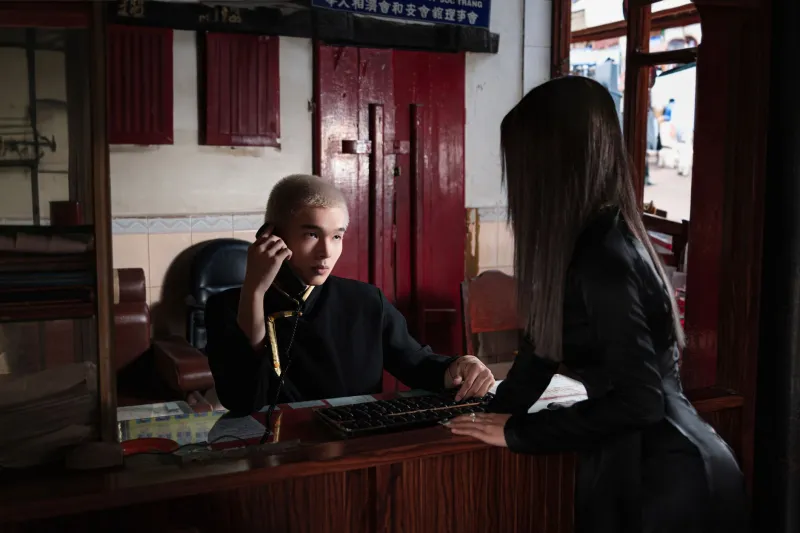
Here's a scenario that plays out in Langkawi hotels more often than anyone talks about: An American guest asks for something at the front desk. The staff member smiles, nods, and says "Yes, of course." An hour later, nothing has happened. The guest goes back, asks again, gets another smile and another "yes" — and still waits.
This isn't incompetence. It's a communication gap that has almost nothing to do with language and everything to do with culture. And once you understand what's actually happening, the whole dynamic shifts.
Why "Yes" Doesn't Always Mean What You Think
In many Southeast Asian cultures, including Malaysian culture, a direct "no" can feel impolite — especially in a service context. Staff may say "yes" to acknowledge that they've heard you, not necessarily to confirm that what you're asking for is possible or imminent. It's a way of keeping the interaction positive rather than a firm commitment.
This isn't deceptive. It's a deeply ingrained social habit, and it works fine in a cultural context where everyone understands the code. For Americans, who tend to treat "yes" as a binding confirmation, it creates confusion.
The fix is simple: instead of asking questions that invite a yes/no answer, ask questions that require specifics.
Instead of: "Can you send up an extra blanket?" Try: "When can I expect the extra blanket to arrive?"
That second version requires the staff member to either give you a real answer or acknowledge that they need to check. It moves the conversation from acknowledgment to action.
Slowing Down Is Not Dumbing Down
Langkawi's hotel staff are trained in English, and most of them speak it well. But spoken English — especially American English, with its regional accents, contractions, and casual phrasing — can be genuinely difficult to parse at speed.
Speaking clearly doesn't mean speaking loudly. It doesn't mean over-enunciating or using a weird simplified vocabulary. It just means slowing down slightly, avoiding slang, and giving the other person a moment to process before you move on.
Phrasings to avoid:
- "Can you hook me up with..." (slang)
- "I'm gonna need you to..." (sounds demanding, unclear)
- "Is there any way you could maybe..." (too hedged, can read as not a real request)
Phrasings that work better:
- "I'd like to request..."
- "Could you please arrange for..."
- "I need [specific thing] by [specific time]."
Direct, polite, specific. That's the formula.
The Written Request Is Underused and Incredibly Effective
If you're making a request that has any complexity to it — a room change, a dietary accommodation, a special arrangement for an anniversary — put it in writing. Not because the staff can't understand you verbally, but because a written request removes ambiguity, creates a record, and can be passed along to whoever actually handles the task without getting garbled in translation.
Most hotels in Langkawi will have a guest services email or a WhatsApp number. Use it. A quick message that says "Hi, I'm in room 214. I'd like to request a room away from the elevator if possible — we're light sleepers. Can this be arranged?" is far more likely to result in action than the same request made verbally at a busy front desk.
If you prefer talking in person, follow up with a text or note summarizing what was agreed. "Thanks for your help — just confirming that the extra pillows will arrive before 9pm tonight." This isn't being difficult. It's being clear.
Building Rapport Without Overdoing It
American travelers sometimes swing between two extremes with hotel staff: either overly casual and familiar (which can create discomfort in a culture where professional roles are taken seriously) or stiff and transactional (which closes off the kind of warmth that makes a stay genuinely enjoyable).
The sweet spot is friendly professionalism. Learn a few words of Malay — "terima kasih" (thank you) and "selamat pagi" (good morning) go a long way. Use staff members' names when you know them. Make eye contact. Acknowledge them when you pass in the hallway rather than staring at your phone.
These small gestures signal that you see the person you're talking to as an individual, not just a function. That matters everywhere, but it matters especially in a culture where relationships and respect are foundational to how service is understood.
And here's the practical payoff: staff who feel genuinely respected are more likely to go out of their way for you. That's not transactional — it's just human.
When Things Go Wrong: Advocating Without Escalating
Something in your room isn't working. The noise from a nearby event is keeping you up. The room you were given isn't what you booked. These things happen, and how you handle them determines whether your stay recovers or spirals.
A few principles:
Stay calm and specific. "The air conditioning in my room isn't cooling below 80 degrees and it's been that way for two hours" is far more actionable than "My room is hot and I'm not happy about it."
Give the hotel a chance to fix it before escalating. Most issues can be resolved by the right person. Ask to speak with the duty manager if the front desk isn't moving fast enough — not as a threat, but as a practical step.
Avoid the word "unacceptable." It tends to put people on the defensive. "I need this resolved tonight" is firmer and less combative.
Don't lead with reviews as leverage. Saying "I'll leave a bad review" before the hotel has had a chance to fix the problem creates an adversarial dynamic that usually makes things worse. If the issue genuinely isn't resolved, that's what reviews are for — after the fact.
The Requests That Actually Work
Some things are easier to ask for than Americans might expect. Langkawi hotels — especially independently run properties — often have more flexibility than chain hotels in the US. Room upgrades, late checkouts, early check-ins, complimentary items for special occasions: these are all worth asking about, especially if you're staying multiple nights.
The key is timing. Ask at check-in when the hotel can see their occupancy, not the night before when everything is already assigned. Be friendly about it, not entitled. "If there's any flexibility on the room, we'd love something with a better view" lands very differently than "I want a room upgrade."
And sometimes? They just say yes. Because you asked nicely, at the right moment, and someone on the other side of the desk decided to make your day a little better.
That's the thing about communication — when it works, it doesn't feel like strategy. It just feels like a good trip.